I led design for a game design tool that increases the accuracy and decreases the time required to design games and animation using AI agents and basic creative tools.
Overview
Capes is an AI powered game design tool that makes game creation faster and easier than ever before. My task was to design a tool for beginners as well as professionals that could be used for young creators to make their first video games.
Challenges
I encountered three main challenges:
1) Slanted and Enchanted
Our first users were young students with the little to no background in design tools or intricate software platforms. They needed to be able to navigate the platform without roadblocks and it needed to be sticky. In order to achieve this we I needed to mix familiarity with magic. They needed to be wowed quickly and convincingly.
2) A deeper understanding
Understanding our users was key. I spent an entire year visiting schools across the country and running test to better understand the daily habits of young students. While doing so, I learned three valuable lessons.
- Students have no loyalty to platforms or studios
- All students are creative
- Student attention spans are almost non-existent
3) The space between
I need to design a platform that breathed life into the user, bust also gave them space to create on their own. The idea is to give them tools and direction, but not too big of a toolbox and not too much direction. Designing this feature was a balancing act of multiple contradictions.
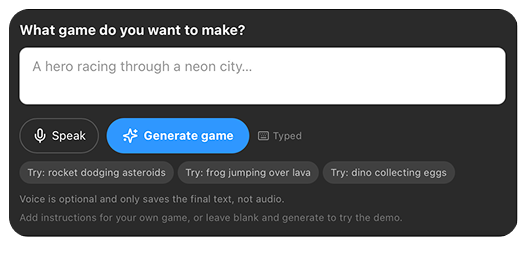
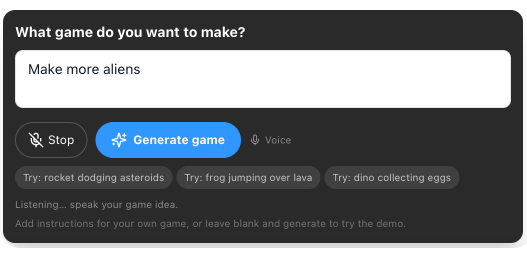
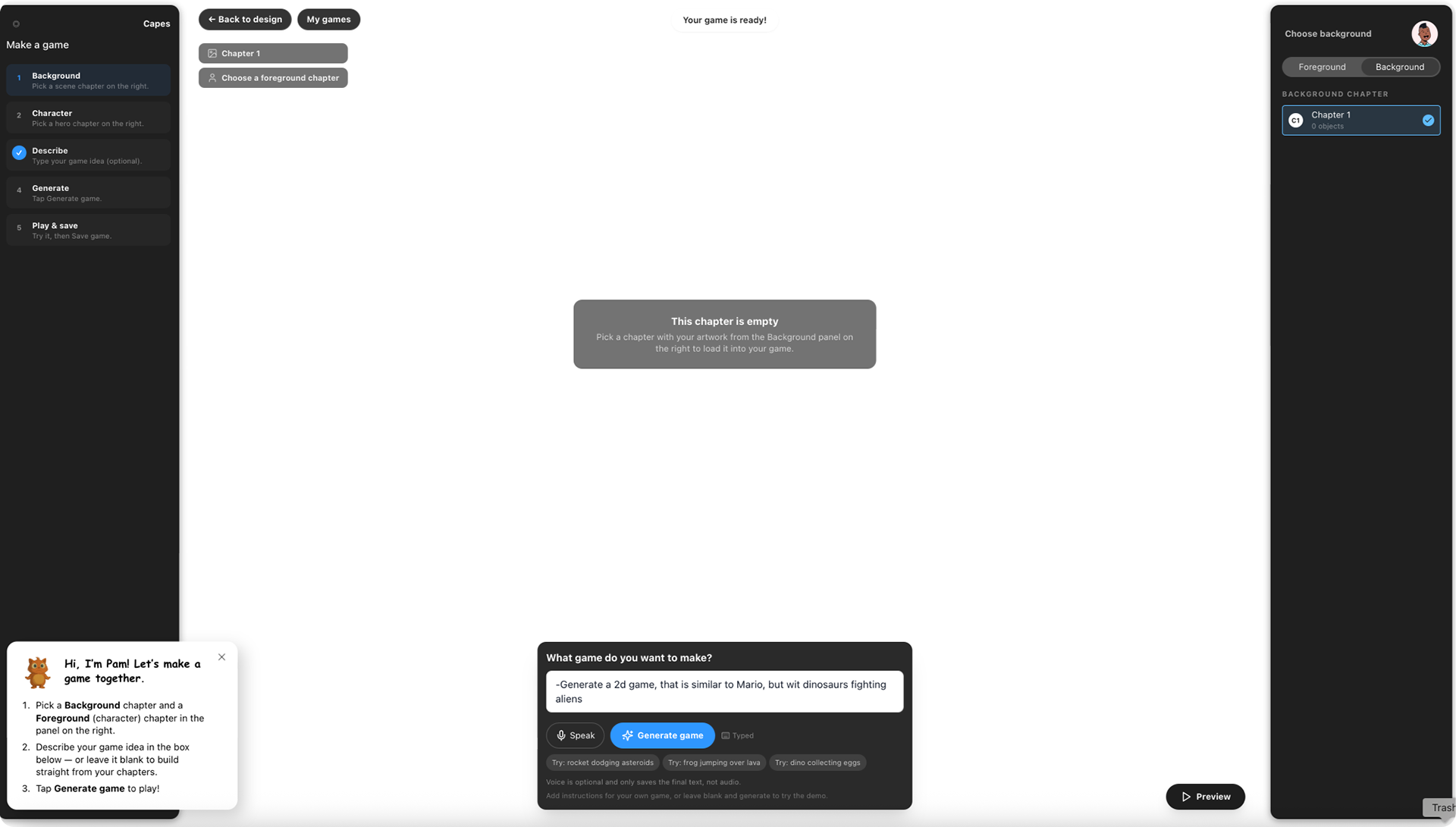
Using AI prompts to create games!
After talking to our users we found out some didn't like typing in prompts and wanted to be able to create their game using their voice. So we added voice feature. The two chat boxers below represent the two different feature options.
The Game!
Our most important feature. The actual generation of the game. Using Claude for AI generation on the backend, students are able to play their own game within minutes!
Bright organization
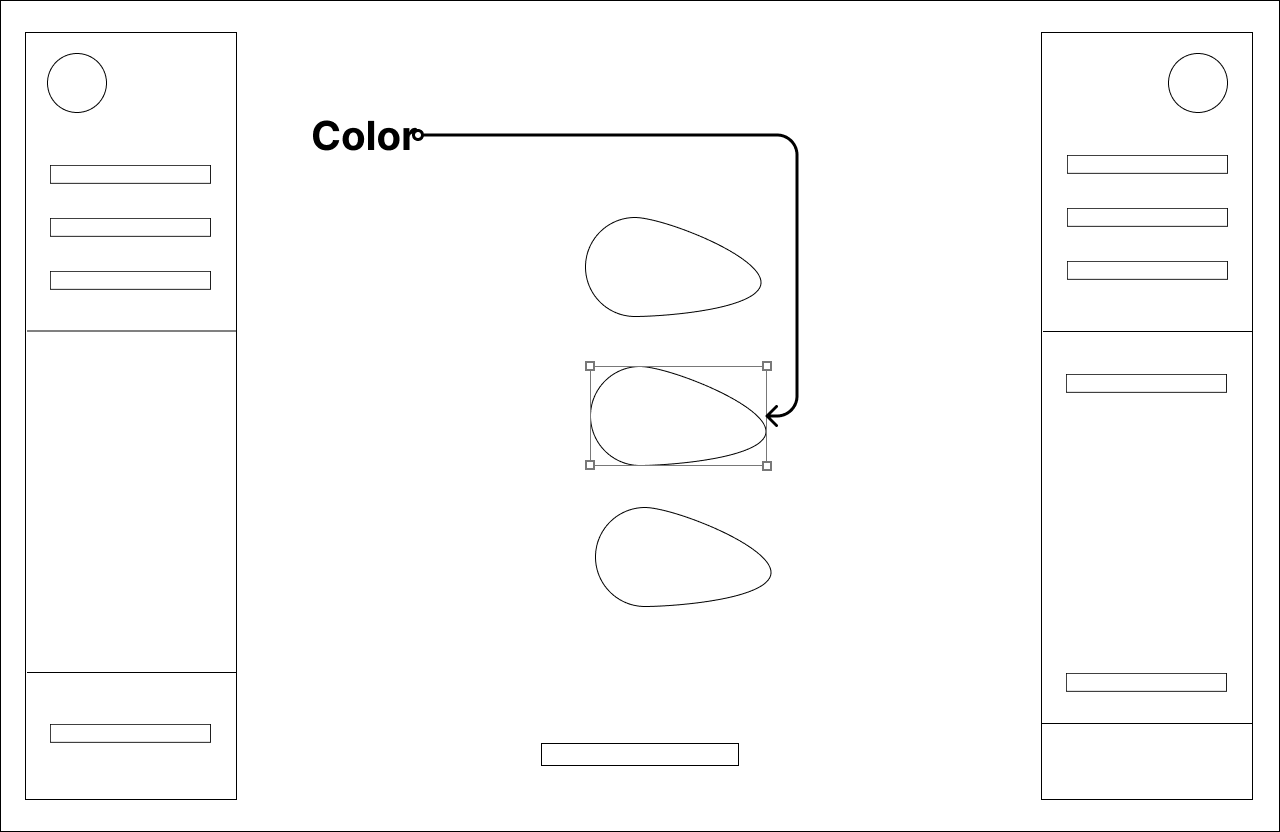
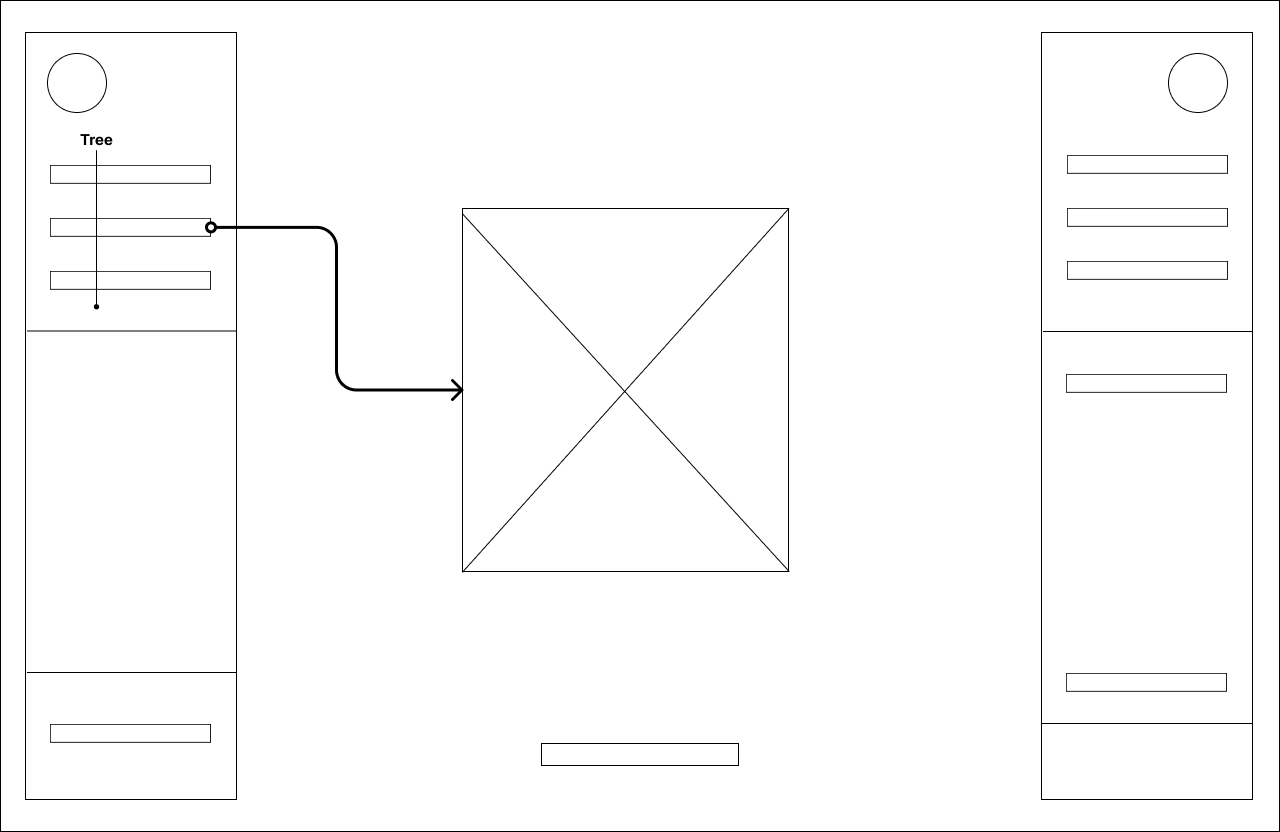
The ability to manipulate color was wildly important for our users and it needed to be at the forefront. We also needed to help our suers stay organized. Finding an organization tree that could help our users achieve their goals faster was at the forefront of the low fidelity wireframes.
The Platform!
Design Principles
We placed an enormous emphasis on user centered design. Our mascot Pam helping users in animated form is a great example. We found early on users had a hard time understanding new features. Pam walks them through the entire platform.
User Journey
What does the user want to do? What can the user do? These were the two most important questions we had to answer when creating an experience for our users. We needed to find out what were the most important aspects of design the user was interested in and design those elements to be useful and easy to grasp.
Whats next?
I will validate all my design decisions based on user feedback and retention. I'll conduct user research and UX audits to understand where users are continuing on their journey and where they're getting stuck. So far designing Capes has been the greatest adventure of my design career and I can't wait to find what wonderful treasures await me on my journey.